Stare Long Enough and the Art Starts Judging You Back.
Firstly—and this will be no surprise to anyone who has ever entered an art prize, or even wandered around an art gallery—judging art is highly subjective.
I had the honour of being asked to be one of three judges for the 2025 Hunter Emerging Artist Prize (HEAP)*. I know with absolute certainty that three different judges would have awarded the prizes to different finalists. We were three people who look at, think, and talk about art a lot. But still we each responded to different aspects of the works and prioritised different criteria.
Outside of work hours I try to maintain a modest art practice, which by necessity requires me to place my work on public display, and I have learned to understand that it ultimately doesn’t matter how an exhibition audience responds to the work, because it’s not something I can control.
But that’s easy for me to say because I don’t make my living from my art.
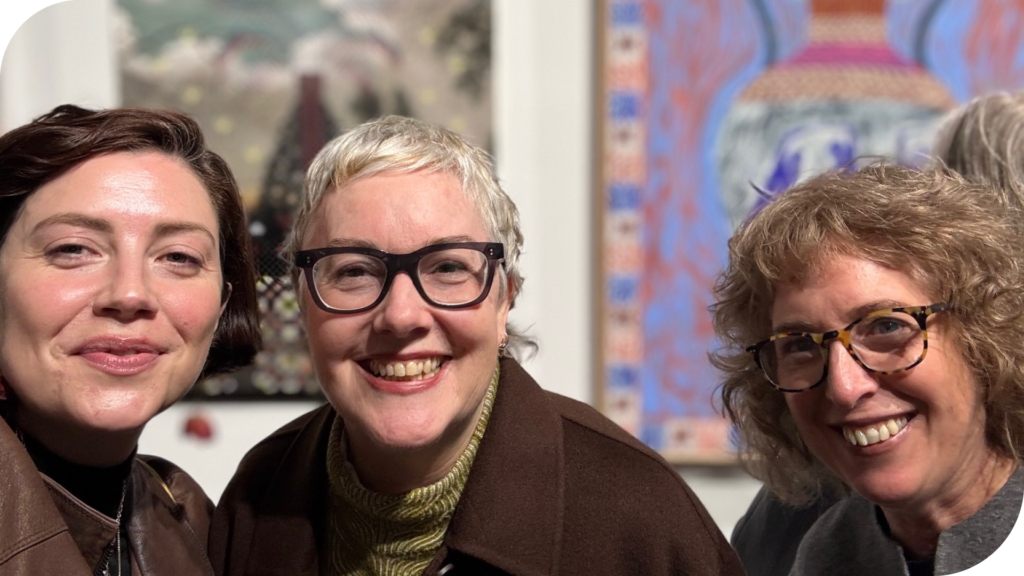
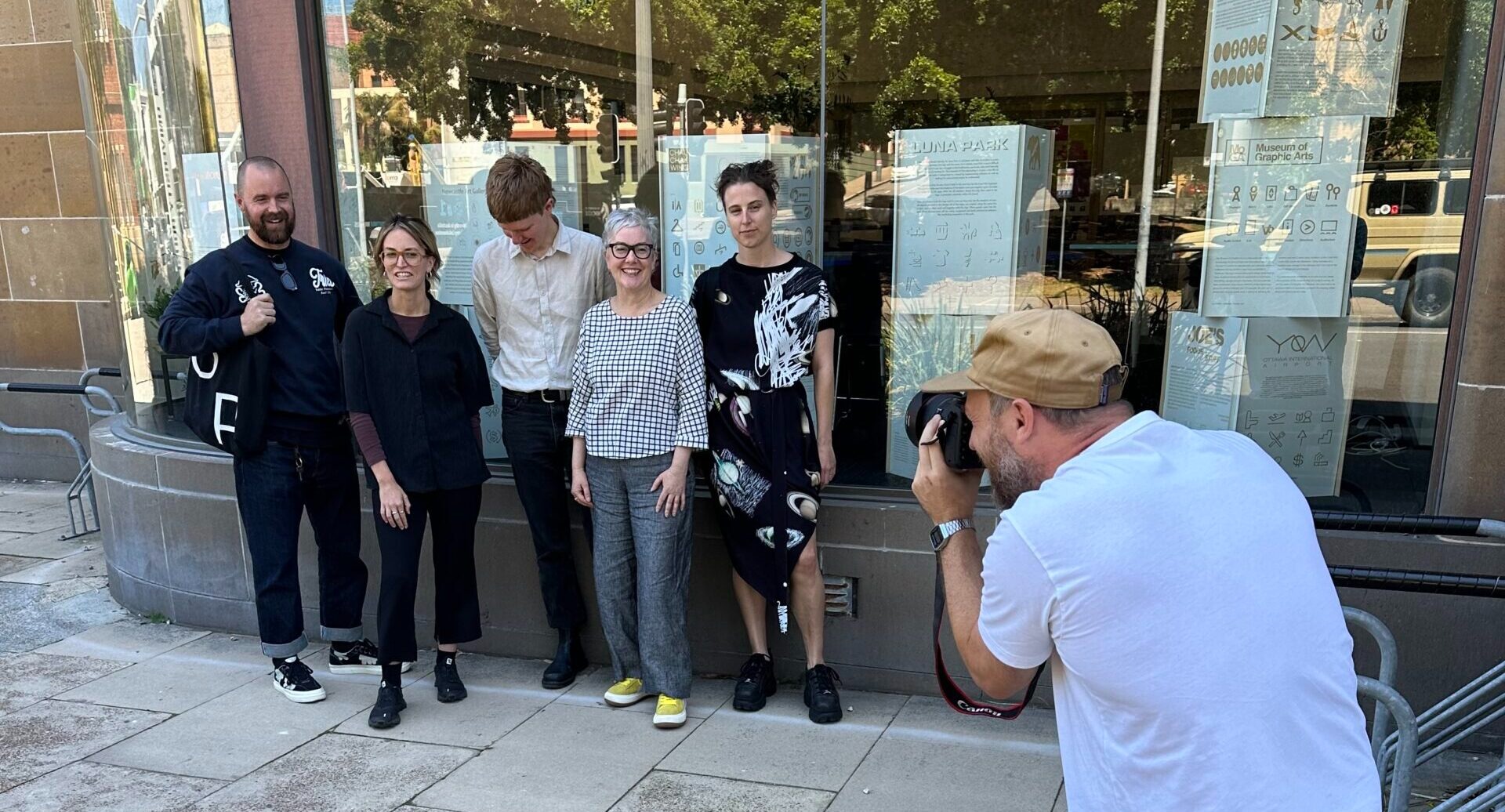
Pictured: HEAP 2025 Judges Alexandra Pedley, Director The Lock Up, and Alison Smith; with Madeleine K Snow, NAS Creative Programs Manager. Photo courtesy of NAS.
So the HEAP experience got me thinking about ‘judgements’ made more broadly on all creative work, including in the commercial sphere of my advertising industry workplace.
I have a great job surrounded by very creative colleagues and I work hard to support them to do their best. They are ideators, designers, videographers, copywriters, art directors, strategists. For them, the success of their output does matter—a lot—because clients must receive a return on their investment.
If aesthetic choices are subjective, how do commercial creatives show value? I think the true question is:
Visual art is a personal expression, without constraint, and the response to it is open. Commercial creative is all about solving a client’s problem by clearly communicating particular messaging, operating within very specific restraints, and eliciting a desired response.
There are many and variable correct answers to any creative problem.
If the work ticks these boxes then it is ‘correct’ regardless of the approach:
- It is aligned with clearly defined strategic objectives
- It fits with overarching brand identity
- It engages and resonates with the target audience
- It suits the platform it exists on
- It drives measurable results
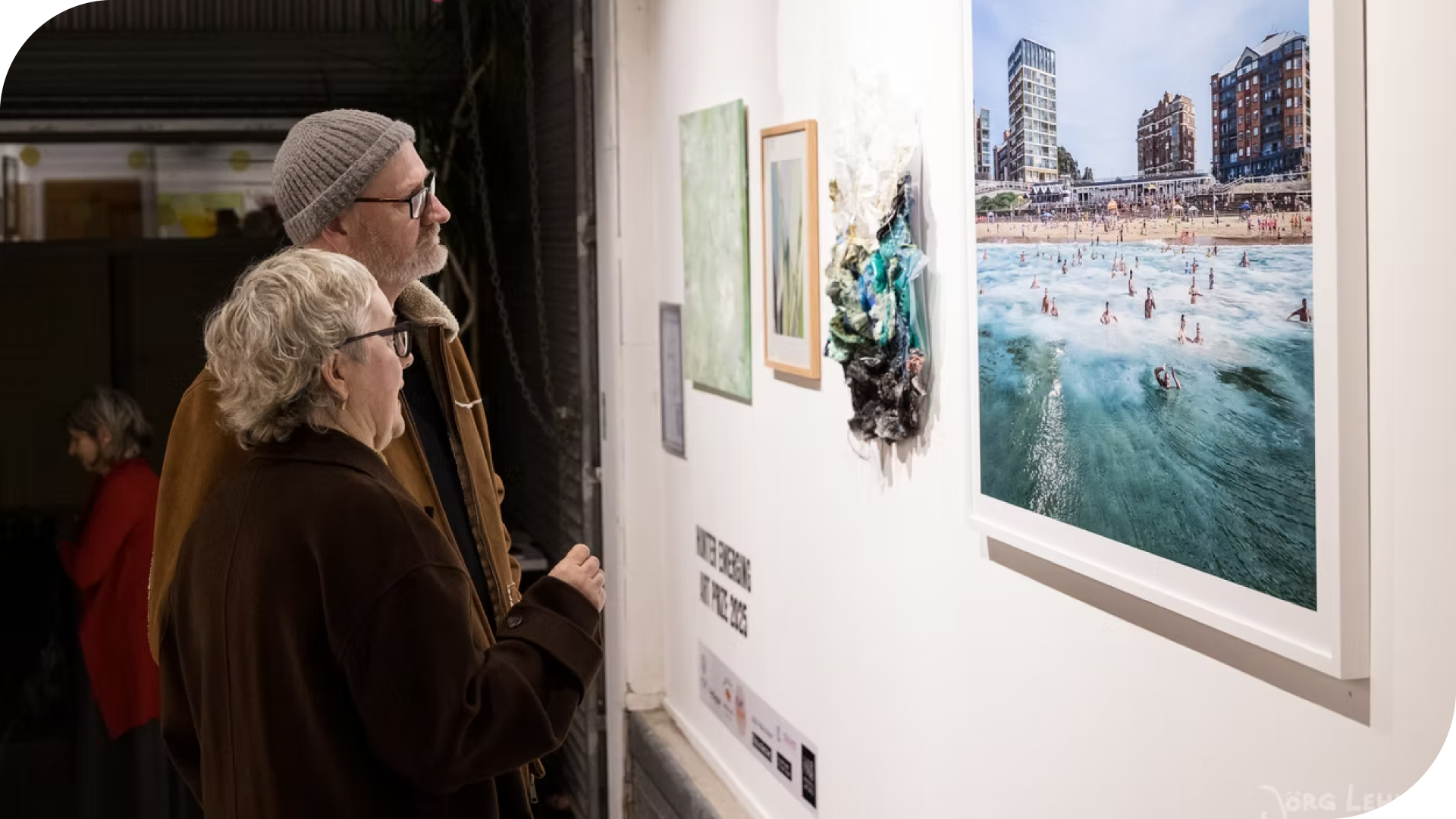
Pictured: Alison viewing the HEAP 2025 Finalists exhibition at NAS. Photo courtesy of NAS and Joerg Lehmann.
I then flipped this thinking back to the world of visual art:
what criteria could I apply to my judging? Does the artwork bring something to me as a viewer that I didn’t know I needed? In the way that a clever piece of advertising makes me want to purchase/invest/follow/engage, is the artwork giving me something that causes a shift in my thoughts and/or feelings that I take forward with me?
As a HEAP judge I felt much empathy for the entrants. My thoughts, and those of my fellow judges, ultimately determined who would receive the wonderful prize money provided, and enjoy the benefits of public validation that their efforts were valued.
The experience also gave me a renewed appreciation for my colleagues who regularly stand up and present their work, putting them in a position where they have to be open to criticism (hopefully only of the constructive kind) and potential rejection. That they have the company name to stand behind makes it no less personal in the moment.
In the studio they have the advantage of being able to consult, review, tweak, rationalise; whatever is required to massage an idea or an execution into the best shape it can be.
And I think that’s where the big difference lies: as a visual artist it’s just me on the wall, and you’re welcome to judge me and take it or leave it. At the office, and in consultation with our clients, we can all work together to collectively produce a result that benefits from the constructive input of others.
The intended market will then be the ultimate judge. They will be the ones to discover how the creative resonates with them and impacts on their behaviour and decisions.
Alison Smith is a born organiser who tries to embrace the uncontrollable when art making. Her work is available from the stockroom of Straitjacket Gallery.
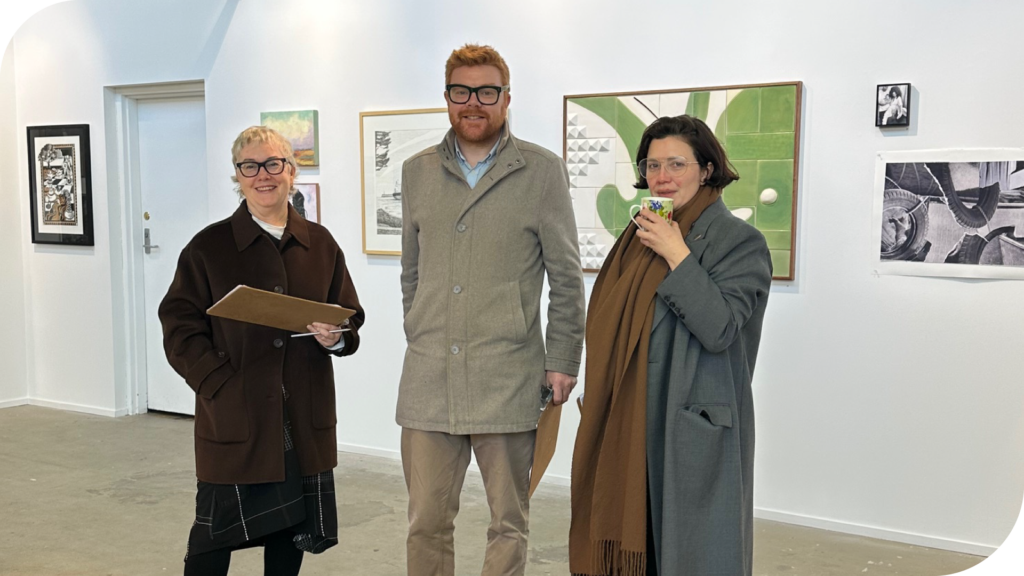
Pictured: HEAP 2025 Judges: Alison Smith with David Rastas, Curator MAP Mima, and Alexandra Pedley, Director The Lock Up. Photo courtesy of NAS.
*HEAP is the leading art prize for emerging artists in the Hunter region.
Contact Newcastle Art Space if you are a local business interested in sponsoring a prize category.